

May 14, 2026 Dental Care Tips for Kids and Teens
Helping Your Family Build Habits That Last a Lifetime
Why Your Child’s Dental Health Starts Earlier Than You Think
At Brown Family Dentistry, we see families at every stage, and one of the most common things parents tell us is that they wish they had started sooner. The habits children form around oral health, whether good or inconsistent, tend to stick. Starting early and staying consistent gives your child a significant advantage not just for their baby teeth, but for the permanent teeth that follow and the oral health they will carry into adulthood.
The good news is that with a little guidance and regular professional care, most dental problems in children and teens are preventable.
Dental Care for Young Children
The American Dental Association recommends a child’s first dental visit by their first birthday or within six months of their first tooth coming in. This early visit is not about finding problems. It is about establishing a relationship with a trusted dentist, learning what to expect, and getting guidance tailored to your child’s development.
For toddlers and younger children, brushing twice a day with a soft-bristled toothbrush and a small amount of fluoride toothpaste is the foundation. Parents should supervise and assist with brushing until children develop the fine motor coordination to do it well on their own, which is typically around age seven or eight. Flossing should begin as soon as two teeth are touching.
Fluoride is an important part of childhood dental care. It helps strengthen developing enamel and reduces the risk of cavities. In-office fluoride treatments and dental sealants, thin protective coatings applied to the chewing surfaces of back teeth, can significantly lower the risk of decay during the years when children are most cavity-prone.
Diet plays a role too. Limiting sugary snacks and drinks, especially between meals, helps reduce the amount of time that sugar is in contact with teeth. Water is always the best option, particularly fluoridated tap water.
What Changes as Kids Get Older
As children move through elementary school, their mouths are changing quickly. Baby teeth are falling out, permanent teeth are coming in, and the jaw is still developing. This is an important window for our doctors to monitor tooth alignment and spacing. Early identification of crowding or bite issues can make orthodontic treatment simpler and more effective down the road.
Children at this age often become more independent with their routines, which means brushing and flossing can start to slip. A quick nightly check and gentle accountability goes a long way. Keeping regular six-month cleanings is just as important now as it was when they were younger, even if everything looks fine. These visits allow us to catch small issues before they become larger ones.
Dental Care for Teenagers
Teenagers face a different set of dental challenges. Their diets often include more acidic and sugary beverages like sports drinks and sodas, which are hard on enamel. The social pressures of adolescence can also make teens more conscious of their appearance, which opens the door for conversations about orthodontics, whitening, and cosmetic options.
For teens in braces or Invisalign, consistent oral hygiene is especially important. Food particles and plaque accumulate more easily around brackets and wires, making thorough brushing and flossing after every meal essential. Teens wearing clear aligners should also be diligent about removing them before eating or drinking anything other than water.
Wisdom teeth typically begin developing in the mid-to-late teen years. Monitoring their growth with X-rays allows us to anticipate any complications and recommend removal at the right time if needed, before the teeth cause crowding or become impacted.
Teens who play contact sports should also be wearing a properly fitted mouthguard. Athletic mouth injuries are among the most common causes of dental trauma we see, and most of them are preventable.
How to Make Oral Health a Natural Part of Your Family’s Routine
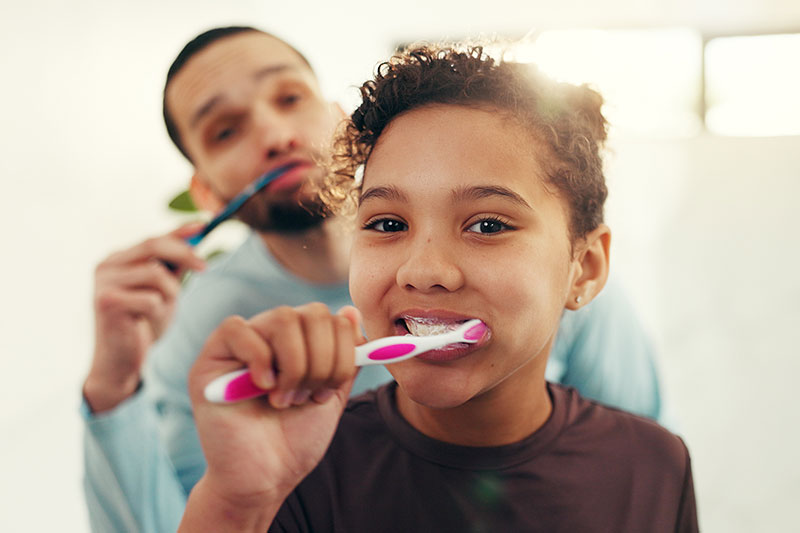
The most effective thing parents can do is lead by example. When children see oral hygiene treated as a normal, non-negotiable part of the day, like putting on shoes before leaving the house, it becomes second nature for them too. Keeping dental appointments consistent, even when kids feel fine, reinforces that this is simply how your family takes care of itself.
At Brown Family Dentistry, we work with patients of all ages and genuinely enjoy watching kids grow up with healthy, confident smiles. Whether you are bringing in a toddler for the first time or scheduling a checkup for your teenager, our team is here to make every visit a good experience for the whole family.
Schedule an appointment today and let us be your partner in your child’s lifelong dental health.